

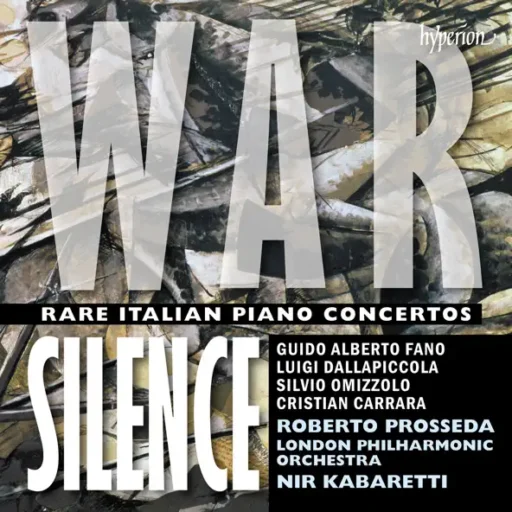
目录
| # | 曲目 | 时长 |
|---|---|---|
|
1 |
Andante e Allegro con fuoco:I. Andante – | 00:04:32 |
| 2 | Andante e Allegro con fuoco:II. Allegro con fuoco | 00:08:47 |
| 3 | Piccolo Concerto per Muriel Couvreux:I. Pastorale. Andantino, un poco flessibile | 00:02:28 |
| 4 | Piccolo Concerto per Muriel Couvreux:II. Girotondo. Allegro ma non tanto, molto ritmato – | 00:02:23 |
| 5 | Piccolo Concerto per Muriel Couvreux:III. Ripresa. Moderato, con poesia | 00:04:16 |
| 6 | Piccolo Concerto per Muriel Couvreux:IV. Candeza. Allegro, molto sostenuto – | 00:02:51 |
| 7 | Piccolo Concerto per Muriel Couvreux:V. Notturno. Lentamente | 00:05:03 |
| 8 | Piccolo Concerto per Muriel Couvreux:VI. Finale. Allegro non troppo, marcato e sostenuto | 00:03:21 |
| 9 | Concerto per pianoforte e orchestra:I. Allegro | 00:07:05 |
| 10 | Concerto per pianoforte e orchestra:II. Andante maestoso | 00:07:43 |
| 11 | Concerto per pianoforte e orchestra:III. Allegro | 00:07:25 |
| 12 | War Silence:I. Trenches | 00:07:43 |
| 13 | War Silence:II. Solitudes | 00:07:12 |
| 14 | War Silence:III. Fruts | 00:05:44 |
专辑简介
This album encompasses four piano concertos by four Italian composers, two of which are first recordings. The music, featured here in chronological order, spans an extended period of time, from 1900 to 2015. The intention of the project is clear: to propose a trajectory that through this repertoire, not so frequent among Italian composers, allows discoveries, re-discoveries and new reflections on historic works.
Guido Alberto Fano (1875-1961) belongs to the so-called ‘Generazione dell’Ottanta’ (‘Generation of the Eighties’): a group of composers including Alfredo Casella, Giorgio Federico Ghedini, Gian Francesco Malipiero, Ildebrando Pizzetti and Ottorino Respighi. They are successors of the tenacious composer Giovanni Sgambati, who had the peculiar historical merit of recovering and renewing the tradition of Italian instrumental, chamber and symphonic music, which had been stifled for over a century. Starting in the second half of the eighteenth century, the prevalence of the widespread and productive melodrama industry, together with the distancing of Italian intellectuals and musicians from the radically innovative reflections that characterized Central European philosophy (Kant’s moral absolute, German idealism that found its most accomplished synthesis in Hegel), created an ever-deeper furrow. A sense of energy and fresh creative stimuli were lacking. Not a single Italian quartet, sonata or concerto from the nineteenth century bears favourable artistic comparison with the many similar European works of that period. It is essential to recognize this difference in quality in order to better understand the value of the feat accomplished by the Generazione dell’Ottanta.

