

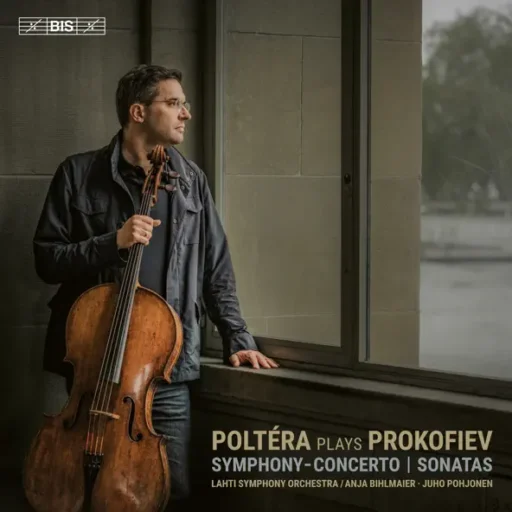
目录
| # | 曲目 | 时长 |
|---|---|---|
|
1 |
Symphony-Concerto in E Minor, Op. 125:I. Andante | 00:10:38 |
| 2 | Symphony-Concerto in E Minor, Op. 125:II. Allegro giusto | 00:18:07 |
| 3 | Symphony-Concerto in E Minor, Op. 125:III. Andante con moto – Vivace – Allegretto – Allegro marcato – Poco meno mosso | 00:10:21 |
| 4 | Sonata for Cello Solo, Op. 134 (Arr. by Vladimir Blok):Sonata for Cello Solo, Op. 134 (Arr. by Vladimir Blok) | 00:07:35 |
| 5 | Cello Sonata in C Major, Op. 119:I. Andante grave – Moderato animato – Andante – Allegro moderato | 00:10:16 |
| 6 | Cello Sonata in C Major, Op. 119:II. Moderato – Andante dolce – Moderato primo | 00:04:39 |
| 7 | Cello Sonata in C Major, Op. 119:III. Allegro, ma non troppo – Andantino – Allegro, ma non troppo | 00:07:48 |
专辑简介
Poltéra has all the warmth and variety of tone, plus technical address, the score demands…There are plenty of distinguished versions of this repertoire on CD, but at bargain price none thate of large-scale choral works on religious themes. Passion settings have a long history, with polyphonic settings for choral performance beginning in the 15th century and continuing up until the high baroque and the monumental works by Johann Sebastian Bach. In his Passion, Pärt looks back to an older tradition, however – the medieval one of a single voice chanting the text. As a result, the narrative –chapters 18 and 19 of the Gospel of St. John –becomes the basis for sustained spiritual contemplation rather than the drama of Bach’s Passions. Another important distinction from earlier Passion settings is Pärt’s treatment of the Evangelist, who narrates the story. Rather than a single voice, he employs a quartet: soprano, alto, tenor and bass, accompanied by an ensemble of four instruments. The only other instrument used in the work is the organ, again in contrast to the larger instrumental forces of the Bach Passions. This contemplative work is here performed by the Helsinki Chamber Choir under Nils Schweckendiek.

