

目录
| # | 曲目 | 时长 |
|---|---|---|
|
1 |
La ville morte, Act I: Introduction | 00:00:57 |
| 2 | La ville morte, Act I: Eros invaincu au combat | 00:01:53 |
| 3 | La ville morte, Act I: Comme tu aimes le soleil… | 00:03:54 |
| 4 | La ville morte, Act I: D’où viens-tu, Alexandre? | 00:04:34 |
| 5 | La ville morte, Act I: L’or, l’or… Une immensite d’or… | 00:03:58 |
| 6 | La ville morte, Act I: Non, non, Leonard! Je t’en prie! | 00:05:12 |
| 7 | La ville morte, Act II: Introduction | 00:01:21 |
| 8 | La ville morte, Act II: Ah, vous êtes seule… | 00:01:52 |
| 9 | La ville morte, Act II: Ah! Les spirales… | 00:13:13 |
| 10 | La ville morte, Act II: Alexandre!… Me voici, Anne! | 00:04:52 |
| 11 | La ville morte, Act II: Tu regardes les joyaux de Cassandre? | 00:06:10 |
| 12 | La ville morte, Act II: Oui, je parlerai | 00:01:32 |
| 13 | La ville morte, Act II: Tu la connais… | 00:05:12 |
| 14 | La ville morte, Act III: Les étoiles commencent à paraître? | 00:08:37 |
| 15 | La ville morte, Act III: Vous appelez Leonard? | 00:06:24 |
| 16 | La ville morte, Act III: Non, non ! Je ne veux pas! | 00:03:56 |
| 17 | La ville morte, Act III: Vous me voyez, mes soeurs, voyez ! | 00:03:51 |
| 18 | La ville morte, Act IV: Prelude | 00:05:41 |
| 19 | La ville morte, Act IV: Ne la touche pas! | 00:02:27 |
| 20 | La ville morte, Act IV: Si elle se levait maintenant… | 00:09:46 |
| 21 | La ville morte, Act IV: Un pas! | 00:02:56 |
| 22 | La ville morte, Act IV: Hébé! Hébé ! | 00:01:31 |
专辑简介
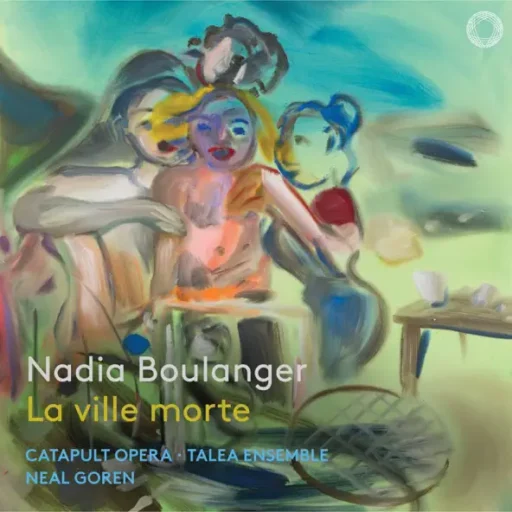
Long overshadowed by her towering legacy as one of the 20th century’s most influential music teachers, Nadia Boulanger’s creative voice as a composer is rediscovered in La vulle morte (The Dead City) – a haunting opera of passion, loss, and psychological intensity.
Composed in collaboration with Raoul Pugno and based on a libretto by Gabriele D’Annunzio, the work was originally planned for its World Premiere in Paris in 1914, but the outbreak of World War I silenced it before it could be heard. Now, more than a century later, this long-buried score rises from obscurity, a revivified opera where forgotten desires return to life against the backdrop of ancient ruins. Set in the crumbling city of Mycenae, where buried passions mirror a decaying past, the opera unfolds through themes of obsession, betrayal, and blurred boundaries. Its rich emotional landscape is matched by impressionistic orchestral textures and intimate, arioso-style writing that nods to the styles of both Debussy and Wagner. In this evocative setting, Boulanger reveals a daring, expressive side that defies her reputation as the stern guardian of musical tradition.

