

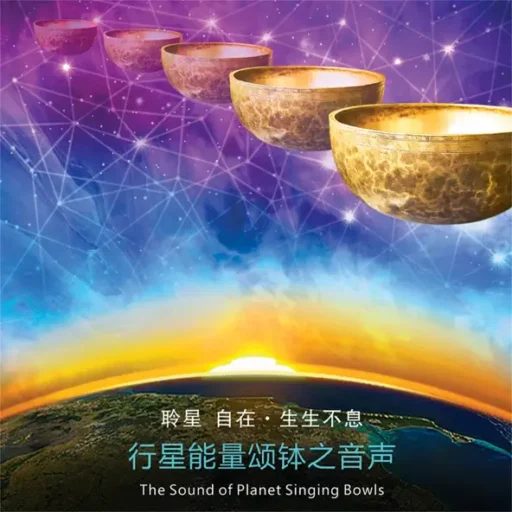
目录
| # | 曲目 | 时长 |
|---|---|---|
1 | 太阳 | 05:36 |
| 2 | 月亮 | 05:09 |
| 3 | 金星 | 04:59 |
| 4 | 木星 | 05:32 |
| 5 | 水星 | 05:48 |
| 6 | 火星 | 04:49 |
| 7 | 土星 | 04:42 |
| 8 | 天王星 | 04:09 |
| 9 | 海王星 | 05:21 |
| 10 | 冥王星 | 05:38 |
| 11 | 凯龙星 | 06:05 |
| 12 | 地球 | 05:34 |
专辑简介
钵音,不一样的音乐体会不一样的境界!ith and the French libetist Etienne Morel de Chédeville. This is no mere translation. Not only Chédeville, but also Lachnith, remade Mozart\’s opera to suit French tastes and even French singers, lowering the Queen of the Night, for example, to a mezzo-soprano. The two acts of the original opera become four, with interpolated arias from other Mozart operas (including Don Giovanni)and even the slow movement of Haydn\’s Symphony No. 103 in E flat major, H. 1/103 thrown in as a curtain raiser. Certainly such insertion arias were common at the time, but the degree of alteration here is extreme. All the characters\’ names change except for Pamina\’s and Sarastro\’s, and Papageno becomes a much more significant figure. The question arises as to why the French would have been interested in the opera at all in a form shorn of its original content; the detailed booklet points out that the opera\’s Egyptian setting would have contributed to its appeal, and notes further that even Wagner\’s operas were performed in French at their premieres. The whole project is interesting for the insight it provides into a time when classical compositions were something other than the sacred texts they later became. Berlioz, who helped that process along, savaged Les Mystères d\’Isis mercilessly (the terms \”wretched hodgepodge\” and even \”assassination\” were used), as did Mozart\’s biographer Otto Jahn, who noted correctly that the adaption strips the low comedy out of the opera. It is nevertheless indefinably appealing to hear this familiar music sung in French, and instructive to study this chapter in the history of how the Mozart legend took shape. The performances are fine: Renata Pokupic as the Queen of the Night, here named Myrrène, is a standout, and the historical instruments of the group Le Concert Spirituel under Diego Fasolis realize unusual and even lush orchestral textures that might not have been recognizable to Mozart but are part of his reception history. Those interested in that reception history will be intrigued by this release.

