

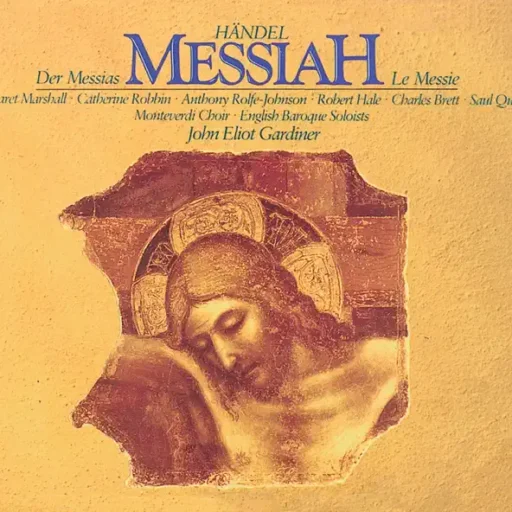
目录
| # | 曲目 | 时长 |
|---|---|---|
|
1 |
Messiah: Symphony | 00:02:54 |
| 2 | Messiah: 1. Accompagnato: “Comfort Ye, My People” | 00:02:19 |
| 3 | Messiah: 2. Air: “Ev’ry Valley Shall Be Exalted” | 00:03:11 |
| 4 | Messiah: 3. Chorus: “And the Glory of the Lord” | 00:02:40 |
| 5 | Messiah: 4. Accompagnato: “Thus Saith the Lord” | 00:01:19 |
| 6 | Messiah: 5. Air: “But Who May Abide the Day of His Coming” | 00:04:18 |
| 7 | Messiah: 6. Chorus: “And He Shall Purify the Sons of Levi” | 00:02:17 |
| 8 | Messiah: 7. Recitative: “Behold, a Virgin Shall Conceive” | 00:00:28 |
| 9 | Messiah: 8. Air – 9. Chorus: “O Thou That Tellest Good Tidings” | 00:05:34 |
| 10 | Messiah: 10. Accompagnato: “For Behold, Darkness Shall Cover” | 00:01:45 |
| 11 | Messiah: 11. Air: “The People That Walked in Darkness” | 00:03:49 |
| 12 | Messiah: 12. Chorus: “For Unto Us a Child Is Born” | 00:04:01 |
| 13 | Messiah: 13. Pifa (Pastoral Symphony) | 00:02:26 |
| 14 | Messiah: 14. Recitative: “There Were Shepherds” – Accompagnato: “And Lo, the Angel of the Lord – Recitative: “And the Angel Said Unto Them” – Accompagnato: “And Suddenly” | 00:01:20 |
| 15 | Messiah: 15. Chorus: “Glory to God in the Highest” | 00:01:43 |
| 16 | Messiah: 16. Air: “Rejoice Greatly, O Daughter of Zion” | 00:04:10 |
| 17 | Messiah: 17a. Recitative: “Then Shall the Eyes of the Blind” | 00:00:21 |
| 18 | Messiah: 18a. Duet: “He Shall Feed His Flock” | 00:04:27 |
| 19 | Messiah: 19. “His Yoke Is Easy” | 00:02:00 |
| 20 | Messiah: 20. “Behold the Lamb of God” | 00:02:39 |
| 21 | Messiah: 21. Air: “He Was Despised” | 00:10:13 |
| 22 | Messiah: 22. Chorus: “Surely He Hath Borne Our Griefs” | 00:02:07 |
| 23 | Messiah: 23. Chorus: “And With His Stripes We Are Healed” | 00:01:52 |
| 24 | Messiah: 24. Chorus “All We Like Sheep Have Gone Astray” | 00:04:11 |
| 25 | Messiah: 25. Accompagnato: “All They That See Him” | 00:00:46 |
| 26 | Messiah: 26. Chorus: “He Trusted in God” | 00:02:16 |
| 27 | Messiah: 27. Accompagnato: “Thy Rebuke Hath Broken His Heart” | 00:01:30 |
| 28 | Messiah: 28. Arioso: “Behold and See” | 00:01:32 |
| 29 | Messiah: 29. Accompagnato: “He Was Cut Off” | 00:00:13 |
| 30 | Messiah: 30. Aria: “But Thou Didst Not Leave” | 00:02:07 |
| 31 | Messiah: 31. Chorus: “Lift Up Your Heads” | 00:02:57 |
| 32 | Messiah: 32. Recitative: “Unto Which of the Angels” | 00:00:13 |
| 33 | Messiah: 33. Chorus: “Let All the Angels of God” | 00:01:25 |
| 34 | Messiah: 34a. Air: “Thou Art Gone Up On High” | 00:03:16 |
| 35 | Messiah: 35. Chorus: “The Lord Gave the Word” | 00:01:08 |
| 36 | Messiah: 36. Air: “How Beautiful Are the Feet” | 00:02:16 |
| 37 | Messiah: 37a. Chorus: “Their Sound Is Gone Out” | 00:01:15 |
| 38 | Messiah: 38. Air: “Why Do the Nations” | 00:02:34 |
| 39 | Messiah: 39. Chorus: “Let Us Break Their Bonds Asunder” | 00:01:35 |
| 40 | Messiah: 40. Recitative: “He That Dwelleth in Heaven” | 00:00:11 |
| 41 | Messiah: 41. Air: “Thou Shalt Break Them” | 00:01:58 |
| 42 | Messiah: 42. Chorus: “Hallelujah” | 00:03:48 |
| 43 | Messiah: 43. Air: “I Know That My Redeemer Liveth” | 00:06:26 |
| 44 | Messiah: 44. Chorus: “Since By Man Came Death” | 00:01:59 |
| 45 | Messiah: 45. Accompagnato: “Behold, I Tell You a Mystery” | 00:00:29 |
| 46 | Messiah: 46. Air: “The Trumpet Shall Sound” | 00:08:16 |
| 47 | Messiah: 47. Recitative: “Then Shall Be Brought to Pass” | 00:00:15 |
| 48 | Messiah: 48. Duet: “O Death Where Is Thy Sting?” | 00:01:19 |
| 49 | Messiah: 49. Chorus: “But Thanks Be to God” | 00:02:46 |
| 50 | Messiah: 50. Air: “If God Be for Us” | 00:05:05 |
| 51 | Messiah: 51. Chorus: “Worthy Is the Lamb. Amen” | 00:07:31 |
专辑简介
蒙特威尔第合唱团(Monteverdi Choir)是由约翰·埃利奥特·加迪纳爵士于1964年在剑桥大学创立的英国合唱团体,专注于演绎巴洛克至浪漫主义时期的声乐作品。其创立首演为蒙特威尔第《圣母晚祷1610》,常与革命与浪漫管弦乐团、英国巴洛克独奏家乐团合作。难免,于是我不再执着于这些作品是否一定具备最初想象的或显而易见的“统一风格”。
回想起上一张专辑《疆•牧歌》,它以整理、改编阿尔泰语系民歌、民乐为主题,其基本素材(词曲)源自民间——那就像是陈列在博物馆里的文物,允许每个人参观或拍摄,但你绝不可将它归为己有,它仿佛背负着相比当代个人化艺术而言更群众化与固化的客观价值,于是它被叫做“民族文化”。
不知从何时起,民族文化被人们达成一致的观念、认知与渐渐固定下来的讲解、说法所保护起来,其形态被保持在公共人文财产当中,这也是传统民歌的特质。而到这张《疆•城市》时,那种特质在第一时间便不复存在了。
前后两张专辑甚至是完全不同的两件事。前者貌似保守,但若细看,就不这么绝对了,《疆•牧歌》的局部与整体反倒来自两个完全不同的时空,例如抛开民歌原素材就整张专辑的乐性来看,《疆•牧歌》实际上非常独立,除旋律及歌词这类单线条外,无论是编曲、配器还是二度创作的构思都更偏向现代音乐方式,且比较个人化。但即使我自己设计、编写及尝试性较强的内容在专辑中占很大比例,或一些细节在以往听过的音乐中从未出现过,专辑整体的气质却仍是古典的。这是《疆•牧歌》容易给听众留下的印象,如同一个朋友这样形容它:“严谨、沉稳,符合人们对传统美的理解,人们往往容易接受,但它又绝不属于流行音乐,至少当下如此。”
上述内容在我做《疆•牧歌》之前,我都想的很清楚。没错,那就是它,它就是那样。除此之外值得一提的是,《疆•牧歌》更是我对我眷恋着的故土的一份回馈。不同的是,后来这张《疆•城市》从基本构成(词曲)就已决定它是更自由及更自我的一套声音集,当中没有用厚重的人文历史记忆做核心,没有公共文化秩序中的对错评判,没有民歌,没有同类比较,好似丢了行囊的旅者,但旅行仍在继续……所以说《疆•城市》是一套更纯粹且更自私的个人音乐作品集。
像很多事物一样,根源音乐、传统艺术,其原本大多也都是和合而成的,那当然也是可以分解的了,分解开来会变化成一些单个线条或零散音符,可能不成章,也可能不再是一件完整作品,既然如此,那便是素材,既是素材,就能够参与到不同的时空中去。
最后还是要致谢所有参与音乐录制与专辑制作的朋友们,感谢你们!-疆

