

目录
| # | 曲目 | 时长 |
|---|---|---|
|
1 |
Alpha and Omega | 00:07:22 |
| 2 | Bring Us, O Lord God | 00:03:32 |
| 3 | Stetit Angelus | 00:04:40 |
| 4 | And I Saw a New Heaven | 00:05:20 |
| 5 | Ecce venio cito | 00:05:57 |
| 6 | I Know That My Redeemer Liveth | 00:05:28 |
| 7 | Seven Trumpets | 00:06:32 |
| 8 | Bring Us, O Lord God | 00:05:38 |
| 9 | Et vidi angelum | 00:04:47 |
| 10 | Faire Is the Heaven | 00:04:57 |
| 11 | Alleluia, Amen | 00:08:23 |
| 12 | Hymn to the Creator of Light | 00:07:02 |
| 13 | The World on Fire | 00:03:31 |
| 14 | The Seventh Angel | 00:05:00 |
专辑简介
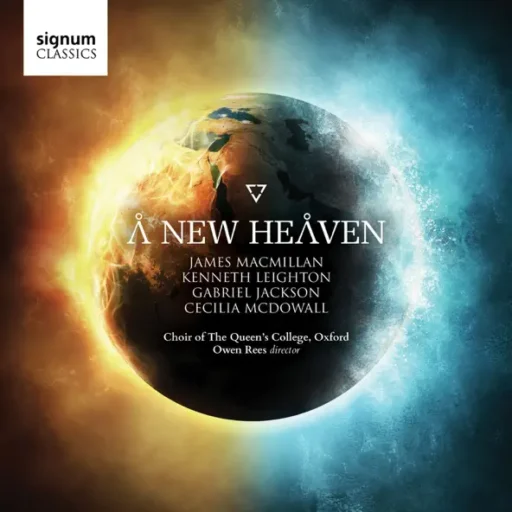
Queen’s College Choir Oxford plunges into a world of music lain waste by wrathful divine judgement—the visions of St John in the Book of Revelation—before emerging joyously into ‘the new heaven and the new earth’, death and suffering conclusively defeated.rmance and by their connections to Oxford and to The Queen’s College. The works both received their premieres at Queen’s, in the college music society’s summer concerts of 1951 and 1952 respectively. One – the cantata Veris gratia – was composed by Leighton when he was still an undergraduate student at the college, while the other – An Oxford Elegy – belongs to the last period of Ralph Vaughan Williams’s long career: he was 79 when he attended the première. Although both are evocations of the pastoral and the bucolic, Leighton’s work celebrates young love in spring and summer through the hedonistic poetry of the medieval Carmina Burana (Leighton studied Classics at Queen’s), while Vaughan Williams’s is filled with nostalgia for an idyllic past, evoked through the poetry of Matthew Arnold. Stylistic threads nevertheless link the works, since Leighton at this early stage in his creative life was strongly influenced by the school of English composition within which Vaughan Williams was a seminal figure.

