

目录
| # | 曲目 | 时长 |
|---|---|---|
|
1 |
String Quintet No. 4 in G Minor, K. 516 I. Allegro | 00:10:37 |
| 2 | String Quintet No. 4 in G Minor, K. 516 II. Menuetto. Allegretto | 00:05:07 |
| 3 | String Quintet No. 4 in G Minor, K. 516 III. Adagio ma non troppo | 00:07:56 |
| 4 | String Quintet No. 4 in G Minor, K. 516 IV. Adagio – Allegro | 00:10:26 |
| 5 | Introduktion und abgebrochenes Finale für Streichquartett | 00:04:04 |
| 6 | String Quintet No. 4 in G Minor, K. 516 I. Allegro moderato | 00:09:31 |
| 7 | String Quintet No. 4 in G Minor, K. 516 II. Adagio | 00:07:22 |
| 8 | String Quintet No. 4 in G Minor, K. 516 III. Menuetto ma allegro | 00:04:04 |
| 9 | String Quintet No. 4 in G Minor, K. 516 IV. Allegro | 00:05:59 |
| 10 | String Quintet No. 4 in G Minor, K. 516 Bagatelle for String Quartet | 00:00:59 |
专辑简介
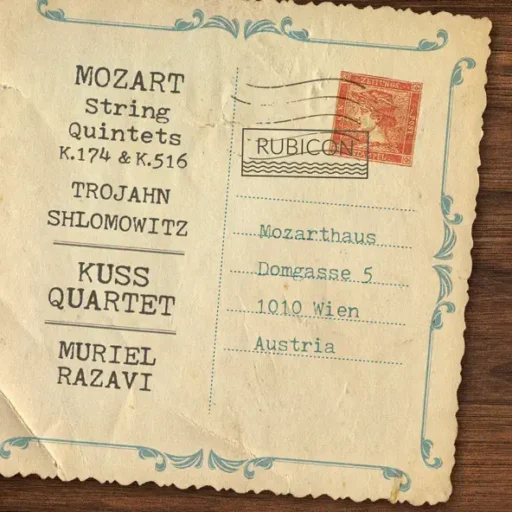
The Kuss Quartet and violist Muriel Razavi embark on a three-volume traversal of the six Mozart String Quintets. The first of these works dates from 1777 and was closely modeled on the contemporaneous quintets by Michael Haydn. The G minor, the 4th of the quintets was composed in 1786. It is dark, turbulent and melancholy, typical of the composer’s G minor works. It is composed on a large scale, especially the opening movement, something it shares with the Prague Symphony No. 38 and the 25th Piano Concerto in C composed at the same time. The Kuss Quartet include two short works for string quartet by contemporary composers to place in between the two quintets and to round the album off.

