

目录
| # | 曲目 | 时长 |
|---|---|---|
|
1 |
Lobet den Herren, alle Heiden | 00:02:11 |
| 2 | Ach Gott von Himmel | 00:04:33 |
| 3 | Ein feste Burg | 00:04:12 |
| 4 | Nu bitten wir den heiligen Geist | 00:07:08 |
| 5 | 17 Cantiones sacrae: No. 8, Fundamentum aliud nemo potest | 00:02:28 |
| 6 | Die Toren sprechen in ihrem Herzen – Es spricht der Unweisen Mund wohl | 00:02:16 |
| 7 | Quicquid erit tandem mea spes | 00:03:55 |
| 8 | O lux beata Trinitas | 00:06:20 |
| 9 | Allein Gott in der Höh sei Ehr | 00:03:33 |
| 10 | Verleih uns Frieden – Gib unserm Fürsten | 00:03:23 |
| 11 | Opus melicum: No. 66, Peccavi super numerum | 00:04:13 |
| 12 | Opus melicum: No. 7, Cantate Domino canticum novum alleluia | 00:03:41 |
| 13 | Opus melicum: No. 2, Nun sey dir Danck Herr Jesu Christ | 00:01:37 |
| 14 | Herr, unser Herrscher | 00:05:27 |
| 15 | Merk fleißig auf – Warum betrübst du dich, mein Herz? | 00:04:46 |
| 16 | Ihr Kinder Israel | 00:09:11 |
专辑简介
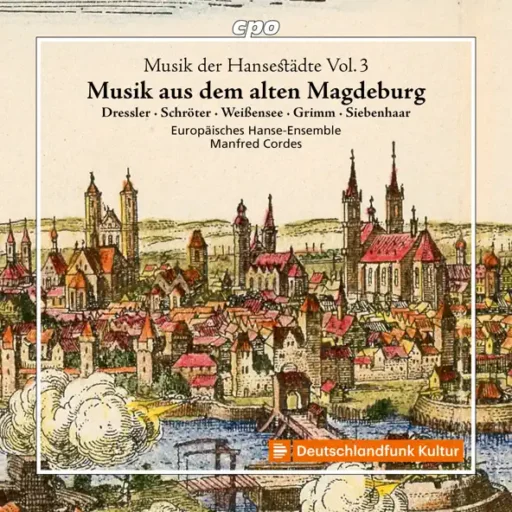
After Stralsund and Danzig, Magdeburg is the third stop on Manfred Cordes’ journey through the cities of the Hanseatic League. This stop not only takes him to a city quite far from the sea but also to the earliest period of Protestant church music. Magdeburg introduced the Reformation already in 1524, just seven years after Luther’s decisive act. Immediately, the transformation began of what the former monk from Eisleben cherished as a “gift and blessing from God” and saw as an effective means of preaching the Gospel. A genuine “Magdeburg School” emerged, with its representatives cultivating and developing the music of the new faith up until the Thirty Years’ War. This program follows that tradition, bringing to life the works of cantors from Martin Agricola to Heinrich Grimm, thus allowing compositions spanning approximately 120 years to resound once more.

