

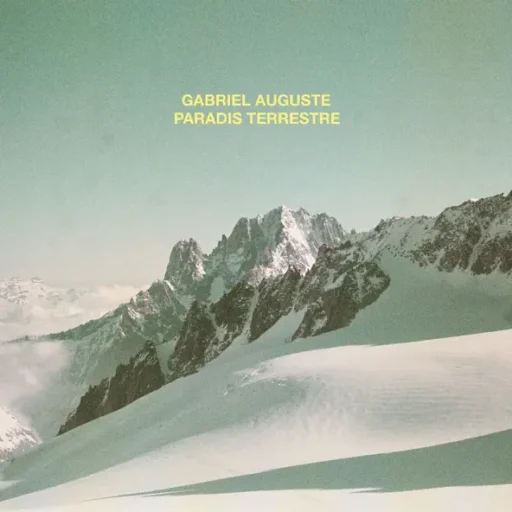
目录
| # | 曲目 | 时长 |
|---|---|---|
|
1 |
Montagne stellaire | 03:25 |
| 2 | Ame cime | 02:08 |
| 3 | Paradis terrestre | 02:17 |
| 4 | Je vole | 04:38 |
| 5 | Un petit coin de bois | 02:19 |
| 6 | Les éclairs | 03:45 |
| 7 | Courant thermique | 01:50 |
| 8 | Le vent | 03:31 |
| 9 | Manteau de neige | 03:39 |
| 10 | Le printemps | 02:18 |
| 11 | Toute puissante | 02:50 |
专辑简介
Le paradis terrestre, appelé aussi jardin des délices ou jardin d’Éden, est décrit dans la Bible dans le livre de la Genèse comme un jardin merveilleux où poussaient toutes sortes d’arbres et de plantes aux fruits délicieux, et où tous les animaux vivaient en harmonie sous la direction de l’homme. recognized surgeon, and her mother a distinguished visual artist.
Her musical journey began in early childhood with piano, soon evolving into a deeper exploration of Persian classical traditions. She studied the tanbur with Maestro Seyed Amrollah Shah Ebrahimi and the tar with Keyvan Saket and Mohamad Reza Ebrahimi, developing a profound connection to Kurdish lyrical traditions and the classical Persian vocal radif. In 1998, she began intensive vocal training with the acclaimed master Parissa, a formative mentorship that shaped the foundation of her artistic voice. She later continued her studies with some of Iran’s most revered vocalists Shahram Nazeri, Hamid Reza Nourbakhsh, and ultimately the legendary Mohammad Reza Shajarian, immersing herself in the spiritual and poetic essence of Persian music.
Alongside her artistic path, Bahar pursued a rigorous academic and professional career in dentistry. She earned her first Doctor of Dental Surgery (DDS) degree in 2003 from Tehran Azad School of Dentistry. Even while practicing dentistry, she remained deeply devoted to music, teaching at various institutes, recording her own work, and continuing her vocal training.Yet, her artistic journey was shaped by a profound limitation: in Iran, women are not permitted to perform as solo vocalists, their voices confined to “co-singing” roles that obscure their individuality. This imposed silence became a defining turning point. In 2010, Bahar immigrated to the United States in pursuit of both academic advancement and the fundamental freedom to express her voice.

