

目录
| # | 曲目 | 时长 |
|---|---|---|
|
1 |
String Quartet No. 6: I. Andante – Vivo | 00:07:02 |
| 2 | String Quartet No. 6: II. Vivace | 00:03:41 |
| 3 | String Quartet No. 6: III. Grave | 00:03:46 |
| 4 | String Quartet No. 6: IV. Dotted Quarter Note = 114 | 00:03:04 |
| 5 | String Quartet No. 1: I. Moderato – Più mosso | 00:06:03 |
| 6 | String Quartet No. 1: II. Tema con variazioni | 00:06:32 |
| 7 | String Quartet No. 1: III. Vivo | 00:04:12 |
| 8 | String Quartet No. 3: I. Allegro ma non troppo | 00:06:19 |
| 9 | String Quartet No. 3: II. Andante | 00:06:25 |
| 10 | String Quartet No. 3: III. Vivo | 00:05:53 |
| 11 | String Quartet No. 7: I. Allegro | 00:05:55 |
| 12 | String Quartet No. 7: II. Grave | 00:06:19 |
| 13 | String Quartet No. 7: III. Con vivezza | 00:05:08 |
专辑简介
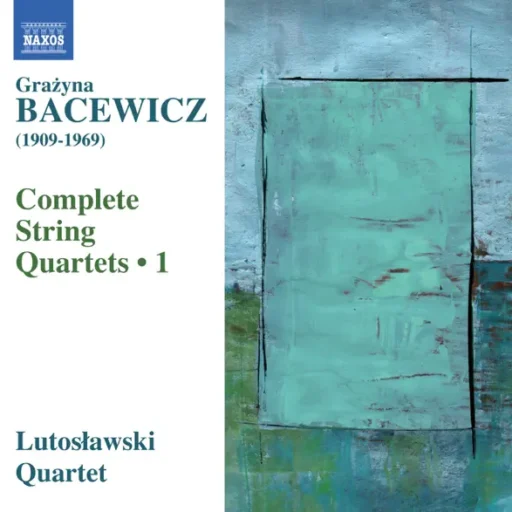
Musicologist Adrian Thomas considered Grażyna Bacewicz’s string quartets “unrivalled in 20th-century Polish music and… one of the century’s most significant contributions to the genre”. Her folk-music infused First Quartet dates from student days at the Paris Conservatoire, while exceptional polyphonic skill, intense emotion and playful, high spirits characterize the Third Quartet. Both the Sixth and Seventh Quartets unite tradition with a strikingly effective and highly personal exploration of progressive contemporary techniques. As Lutosławski observed, in the “rapidly changing artistic currents” of the times, “it was [Bacewicz’s] music which helped create that atmosphere”.

