

目录
| # | 曲目 | 时长 |
|---|---|---|
|
1 |
Violin Concerto No. 3 “Alhambra” | 00:23:19 |
| 2 | Le Sacre du printemps, K. 15, Pt. 1, L’Adoration de la Terre: I. Introduction | 00:03:32 |
| 3 | Le Sacre du printemps, K. 15, Pt. 1, L’Adoration de la Terre: II. Les Augures printaniers – Danses des adolescentes | 00:03:26 |
| 4 | Le Sacre du printemps, K. 15, Pt. 1, L’Adoration de la Terre: III. Jeu du rapt | 00:01:18 |
| 5 | Le Sacre du printemps, K. 15, Pt. 1, L’Adoration de la Terre: IV. Rondes printanières | 00:03:20 |
| 6 | Le Sacre du printemps, K. 15, Pt. 1, L’Adoration de la Terre: V. Jeux des cités rivales | 00:01:41 |
| 7 | Le Sacre du printemps, K. 15, Pt. 1, L’Adoration de la Terre: VI. Cortège du sage | 00:00:39 |
| 8 | Le Sacre du printemps, K. 15, Pt. 1, L’Adoration de la Terre: VII. Le Sage – Danse de la Terre | 00:01:38 |
| 9 | Le Sacre du printemps, K. 15, Pt. 2, Le Sacrifice: I. Introduction | 00:04:23 |
| 10 | Le Sacre du printemps, K. 15, Pt. 2, Le Sacrifice: II. Cercles mystérieux des adolescentes | 00:03:40 |
| 11 | Le Sacre du printemps, K. 15, Pt. 2, Le Sacrifice: III. Glorification de l’élue | 00:01:25 |
| 12 | Le Sacre du printemps, K. 15, Pt. 2, Le Sacrifice: IV. Évocation des ancêtres | 00:00:39 |
| 13 | Le Sacre du printemps, K. 15, Pt. 2, Le Sacrifice: V. Action rituelle des ancêtres | 00:03:48 |
| 14 | Le Sacre du printemps, K. 15, Pt. 2, Le Sacrifice: VI. Danse sacrale (L’Élue) | 00:04:53 |
专辑简介
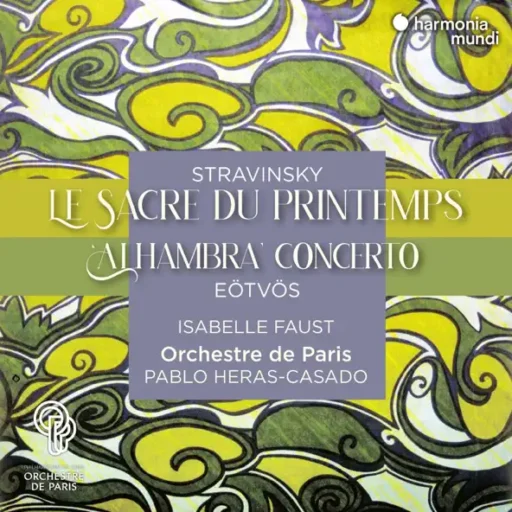
Stravinsky’s epic Rite of Spring is paired here with the world-premiere recording of Péter Eötvös’s “Alhambra” Concerto performed by the work’s dedicatees, Isabelle Faust and Pablo Heras-Casado.d long-awaited compendium of Beethoven’s complete works for cello and piano, including Beethoven’s arrangement of his Op 17 Horn Sonata. The use of the fortepiano opens up a wealth of sonic possibilities for these works.
The five Cello Sonatas span Beethoven’s compositional epochs and comprise the most important cycle of cello sonatas in the entire repertoire. Isserlis writes that the composer ‘transforms himself from confident virtuoso to supreme master of classical form, and then beyond that to a mystic exploring strange new worlds of unearthly beauty—a wondrous transfiguration’.

